Women at the Heart of Climate Action



From across Kenya and Uganda, the journey returned to Uganda’s central region, Mpigi District, where fertile soils and rolling hills are under pressure from unpredictable weather, soil degradation, deforestation, and water scarcity. Here, the Gejja Women Foundation has emerged as a beacon of community-led climate action, linking environmental sustainability with women’s empowerment, livelihoods, and education.
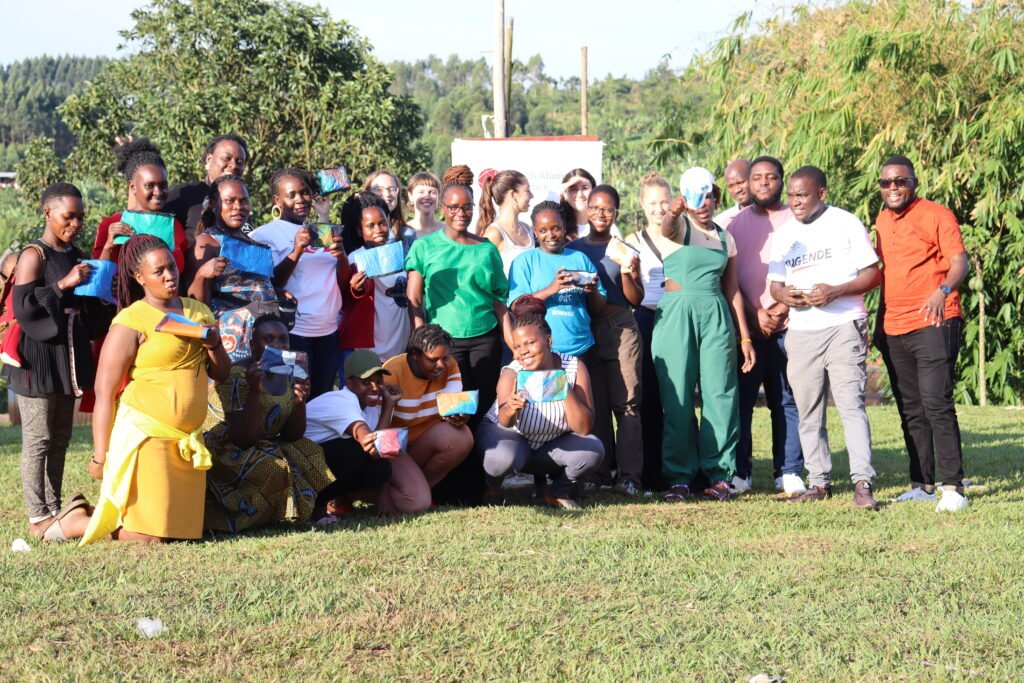
On 12 October 2024, Hannah Bamwerinde, a Bosch Alumni Network member, led a group of 15 Bosch Alumni Network members from Uganda to the Gejja Women Foundation, guided by another member, Atuhuura Marjorie. The visit served as a “get together” to learn about Gejja’s grassroots model, exchanging ideas, and supporting their ongoing work.
The day began with community barazas (dialogues) at the Gejja Foundation, where women and youth shared their lived experiences of environmental change. These sessions were not lectures but conversations, spaces where local voices shaped the agenda, identifying both the threats they face and the opportunities they see for adaptation.
After creating rapport with the staff at the Gejja Foundation, Faith Aweko, another Bosch Alumni Network member and founder of Reform Africa, provided hands-on training on recycling plastic bags into usable products. By the end of the session, all the participants, both Bosch Alumni Network members and those from the Gejja Foundation, had made something with their own hands, a tangible reminder that waste can be transformed into value.
Hands on training
Following the training by Reform Africa, Marjorie Atuhuura, Gejja’s founder, led training on composting, organic farming, soil regeneration, and water conservation. These techniques were integrated into Gejja’s demonstration farm, a living classroom where climate-smart agriculture is practised daily. Here, theory meets practice, and visitors can see precisely how mulching, intercropping, and organic soil amendments improve yields and resilience.
One of the most powerful aspects of this visit and the model at the Gejja Foundation is its use of existing community structures. What would typically be a women’s empowerment effort could also be leveraged for climate action.
The Mpigi experience reinforced five key lessons:
- Women are central to climate resilience.
- Climate education must be practical.
- Traditional knowledge and modern techniques can work together.
- Functional community structures already exist.
- Sustainability requires local ownership.
Mpigi’s story closed the loop on the project’s central question. Across all six locations, the answer was clear: yes, local structures have what it takes to lead climate action.