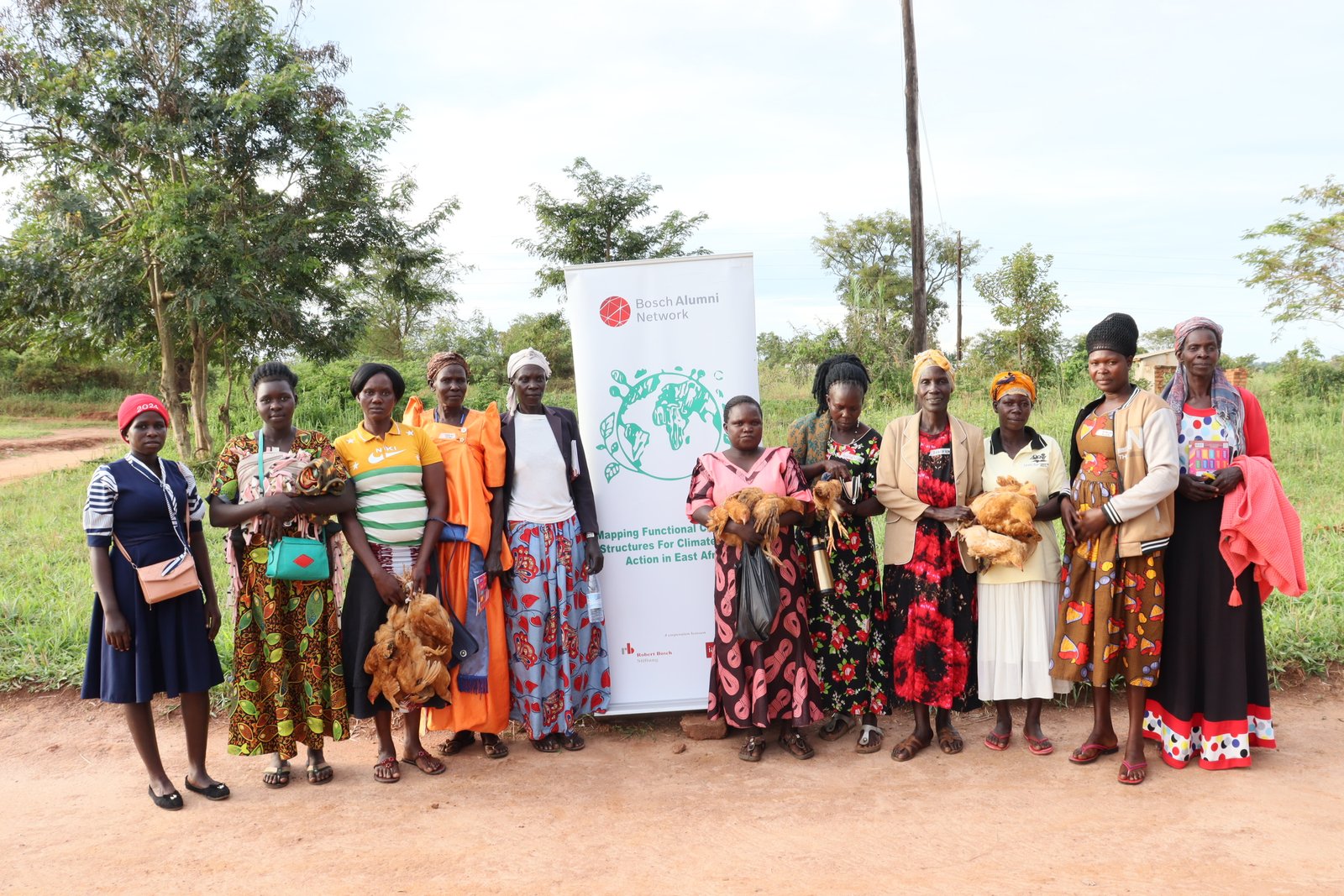
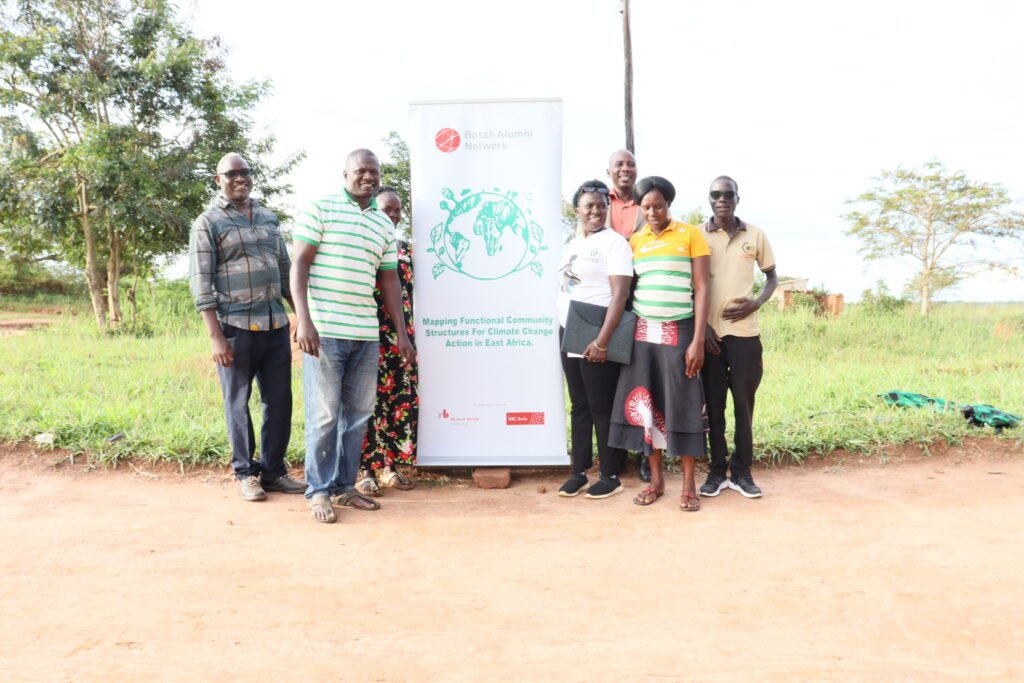
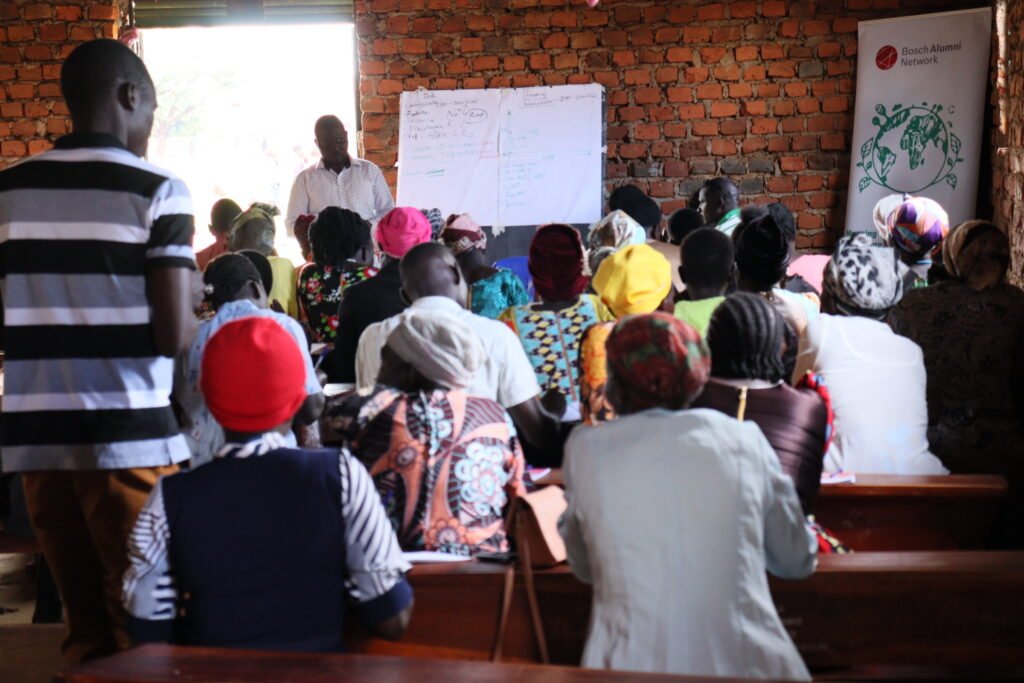
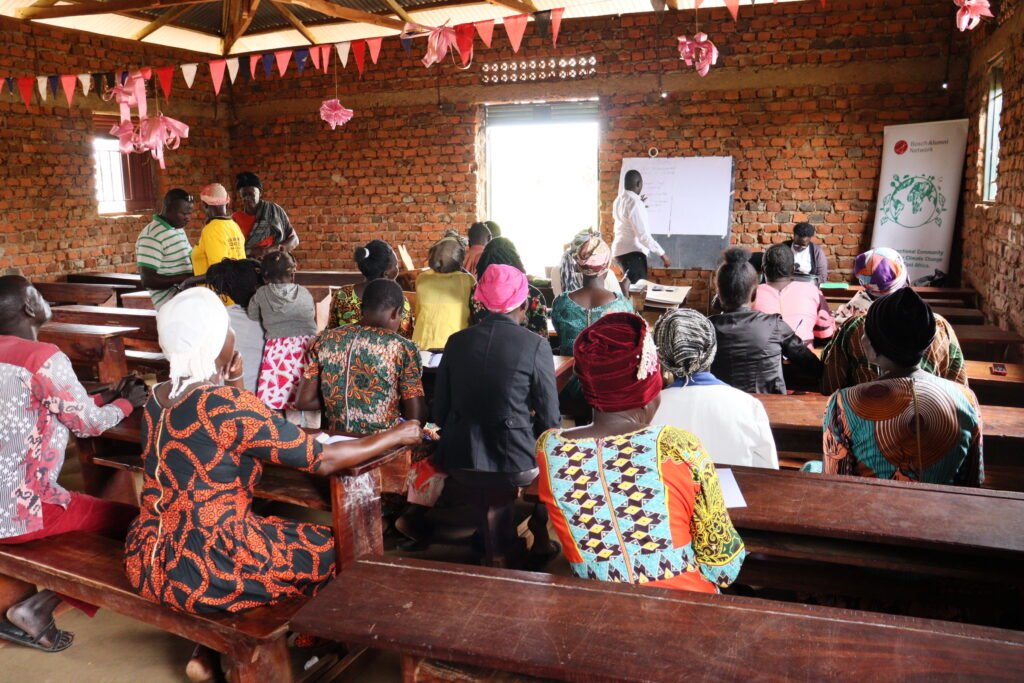
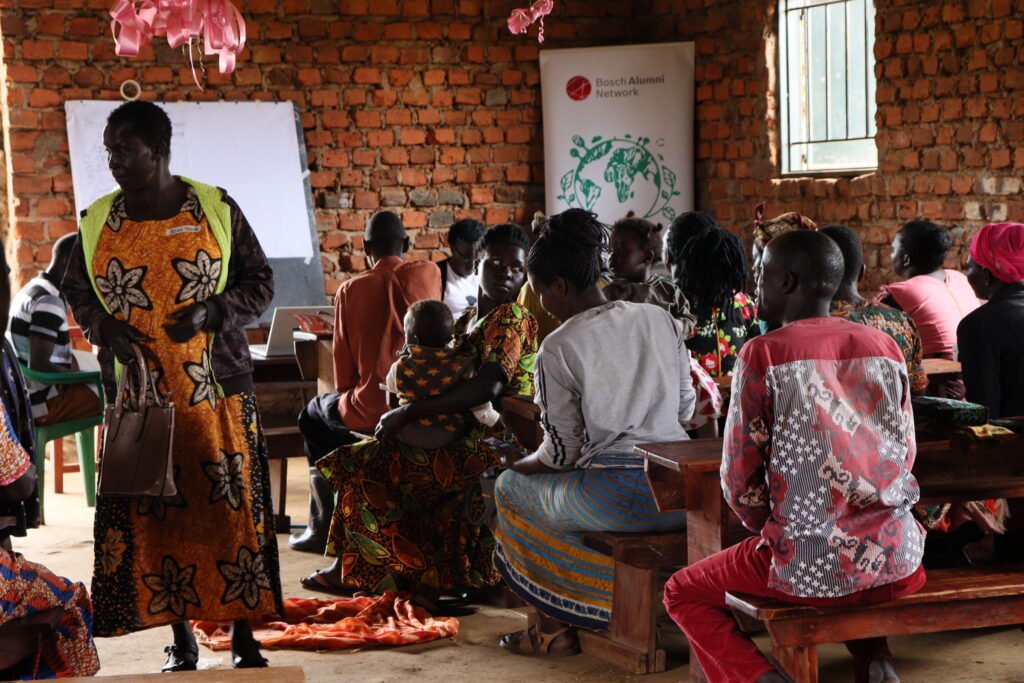
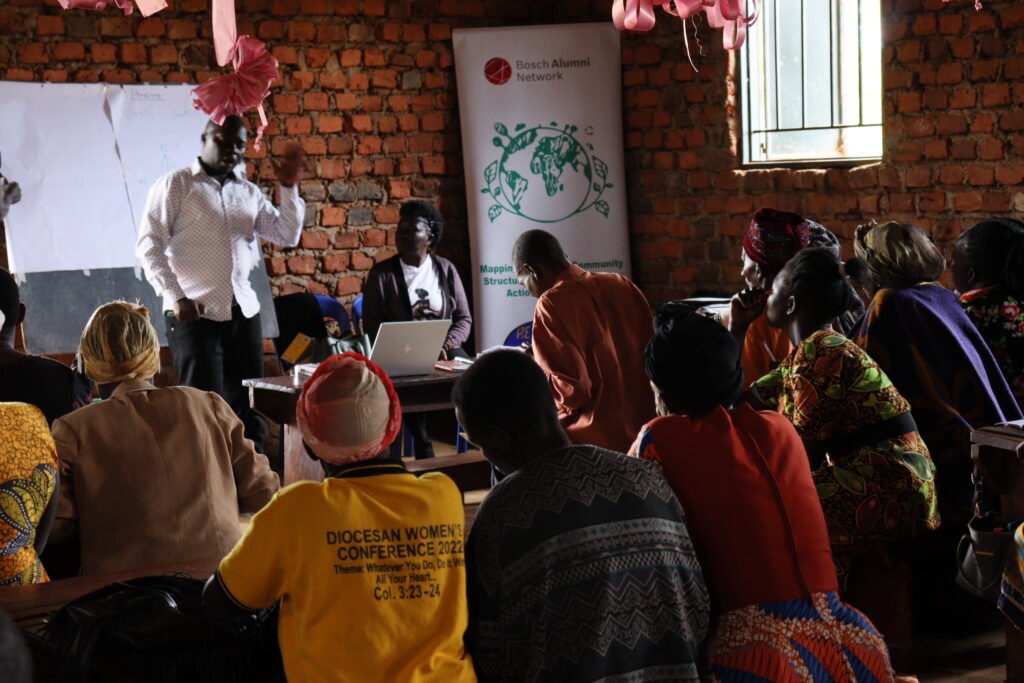
Phase II was coordinated by Biwedde Kawooya, a Bosch Alumni Network member as lead, and Ann as host, added two income-generating enterprises, poultry keeping and beekeeping, to sustain tree-growing efforts. 60 women were trained in poultry management because women-led initiatives are more sustainable due to women’s proactive nature in this area. Some participants, such as Janet Anyumel, are integrating poultry into diversified farms alongside citrus fruits, pine trees, and beekeeping. Meanwhile, others, such as Mrs. Demterina Agwelo Otigo, have expanded from a single chick to seven birds, saving weekly from egg sales and planning to scale up.
Beekeeping followed a locally trusted village model, with one demonstration apiary in Omarai Achilo Village and four more in Ominai, Alwa A, Agorokoch, and Oriamo Odingoi. Each village received 10 top-quality bee hives, overseen by lead farmers and linked to nearby restoration sites. Notable restoration sites in this regard include the 15-hectare Angutawele arboretum, planted with 18 indigenous tree species, including mahogany, tamarind, Prunus Africana, and Vitellaria indica. The arboretum serves as a living classroom, an eco-tourism asset, and a pollinator haven.
Monitoring visits revealed high hive colonisation rates in most sites, with strong colonies expected to yield harvests during the December 2025–March 2026 honey flow season. Some sites, like Oriamo Odingoi, struggled due to poor management and pest attacks, prompting corrective action and refresher training.
Beekeeping is thriving, poultry farmers are expanding their stock, and bamboo stands are maturing into valuable resources. The arboretum is on track to be fully established with endangered and medicinal species, positioning it as a regional learning and eco-tourism hub.
Beyond our project, tree-growing in this area is sustained by complementary enterprises: simsim (“white gold”), cassava multiplication supported by Makerere University Business School’s Innovation Hub, and village savings groups like Kok Cankede Kweru. Additionally, in a groundbreaking move, CIFED partnered with the National Social Security Fund to enrol 33 groups reaching 825 members in voluntary savings schemes, bringing rural smallholders into formal finance for the first time.
This demonstrates that local structures are true engines of transformation and that they only need to be jump-started with local means of implementation, capacity, finance, and technology.