Imagine a bottom-up world where climate action doesn’t cascade from the top down but rises from the ground up, where the most effective solutions are not imported but grown in the soil of local culture, governance, and trust. Do local structures have what it takes to lead?
This two-year project, coordinated by members of the Bosch Alumni Network, set out to find out exactly that with two guiding questions: 1) What is already working well in developing countries that could be leveraged for climate action? 2) How can such efforts be strengthened to champion locally led climate action?
As you very well know, climate change is a global threat, but its impacts are felt most sharply in developing countries. The prevailing narrative, reinforced by principles such as Common but Differentiated Responsibilities (CBDR) under the UNFCCC and the Paris Agreement, casts these nations as recipients of finance, capacity-building, and technology from the industrialized world. While this support is vital, it often comes packaged in top-down approaches that overlook the systems, cultures, and governance structures already in place at the grassroots.
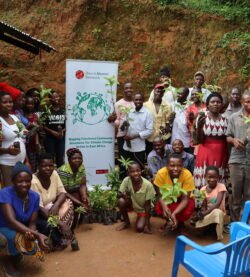
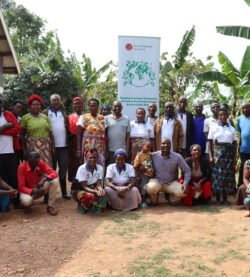
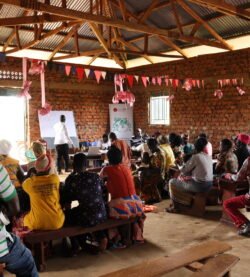
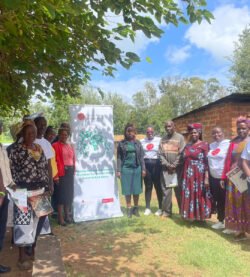
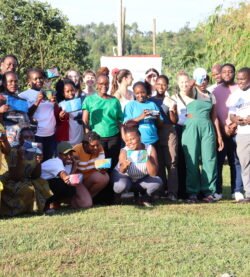
Yet, across Uganda and Kenya, functional local structures, from savings cooperatives to women’s associations, youth clubs to farmer field schools, are quietly delivering climate solutions that are culturally embedded, socially trusted, and economically viable. The critical challenge is that they are rarely documented, celebrated, or scaled.
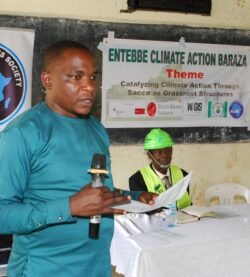
Against this background, our collaborative mapping effort brought together an extraordinary team of the Network’s Alumni: Mary Namukose (Entebbe, Phase I and Kaberamaido Phase I), Ann Grace Akiteng (Kaberamaido Phase I & II), John Mugabi (Entebbe Phase I & II), Daphne Naudho (Entebbe Phase I & II), Stephen Bright Sakwa (Bududa & Manafwa Phase I & II), Simon Peter Okoth (Bududa & Manafwa Phase I & II), Hannah Bamwerinde (Kabale Phase I & II, Mpigi Phase II), Atuhuura Marjorie (Mpigi Phase II), Rachel Vichei (Kenya Phase I & II), Sharon Nga’ayo (Kenya Phase I and II), Esther Gacigi (Kenya Phase i and II), and John Muia (Kenya Phase I and II). Together, they identified, visited, and documented local initiatives that demonstrate that bottom-up climate action is not only possible but already happening.